Location Intelligence for Marketing That Drives Results
Despite increasing marketing budgets, 61% of marketers say measuring ROI remains their top challenge. Digital dashboards may show plenty of clicks and impressions, but these

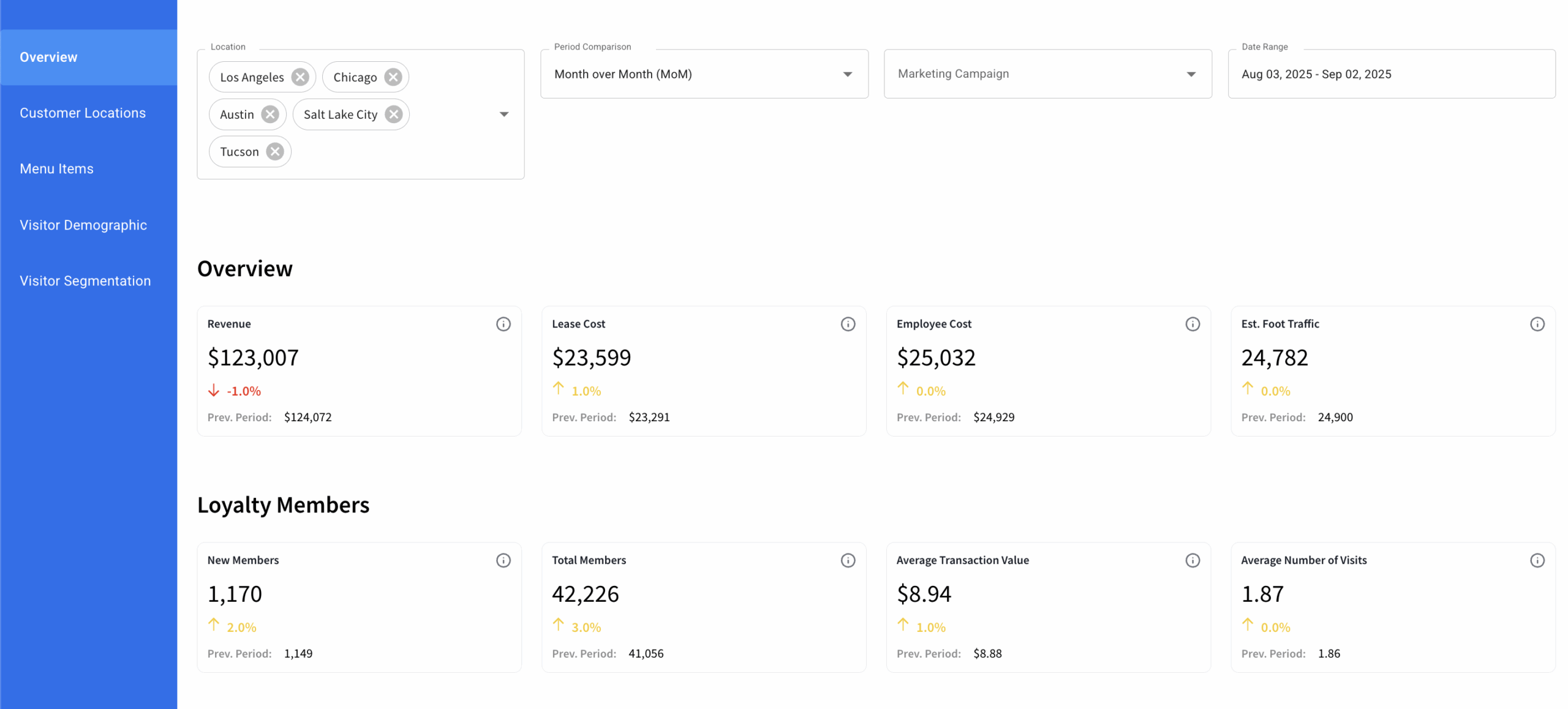
With Mapchise, you’ll see all your customer data in one place, so you can really understand your customers and the revenue they drive.
Built specifically for restaurants, Mapchise helps you unify online and offline customer data to deliver marketing insights, revenue metrics, and smarter business decisions based on what works best for your customers.
Get the true restaurant customer data platform to eliminate fragmented tools and guesswork. With Mapchise, you can:
Link your visits and sales to your customer personas. Measure the true effect of your marketing efforts across all channels and see how restaurant analytics translate to ROI.
Know exactly what your customers love, what they avoid, and why they leave.
Lifecycles, repeat visits, and campaign success are tracked to determine what drives customer loyalty and what causes them to leave.
Restaurant CDPs are software solutions that collect and integrate data from sources such as point-of-sale systems, online orders, reservations, and loyalty programs into a single, unified view of the customer.
Restaurant CDPs are needed because, unlike traditional data analysis software, CDPs recognize the complexity of the consumer experience, from menu items and flavors to visit frequency. Restaurant CDPs provide deeper analysis for the restaurant marketing industry, moving beyond initial metrics like open rates to focus on revenue.
Restaurant CDPs enable brands to understand the impact of their marketing on sales, turning data into actionable strategies for growth.
| Feature | Restaurant CDP (Customer Data Platform) | CRM (Customer Relationship Management) | POS Analytics & Dashboards / Marketing Analytics |
|---|---|---|---|
| Definition | A platform that analyzes customer behavior individually, connects actions to a single identity, and determines the reasons behind purchases. It provides a comprehensive view of the customer journey. | A repository for customer data and history, primarily focused on managing contacts. |
POS: Provides insights into sales, redemptions, and timing. Marketing Analytics: Links consumer identification to spending and marketing effectiveness. |
| Strengths |
• Analyzes behavior in depth. • Connects various actions to a single identity. • Understands the "why" of purchases. • Enables understanding of the entire customer journey. |
• Great for storing and managing customer contacts and history. |
POS: Tracks what was sold, redeemed, and when. Marketing: Measures marketing effectiveness and links to spending. |
| Limitations | Focuses on advanced analysis and growth rather than basic data storage. | Lacks depth to analyze behavior or connect actions for deeper insights. |
POS: Overlooks broader consumer journeys. Marketing: May not provide full journey understanding without robust tools. |
| Key Benefit for Growth | Enables understanding of the entire customer journey, improving marketing and operations. | Useful for contact management but insufficient for behavioral growth strategy. | Provides sales insights but misses holistic consumer views unless deeply integrated. |
We connect directly to your POS, loyalty, reservations, and marketing tools. Everything flows into one platform that gives you a real-time view of your business.
With your data in one place, you can answer the big questions that matter most:
What’s driving customer churn?
Which menu items build loyalty or cause drop-off?
How effective was your last marketing campaign?
What’s your product mix across channels?
How fast are first-time visitors becoming regulars?
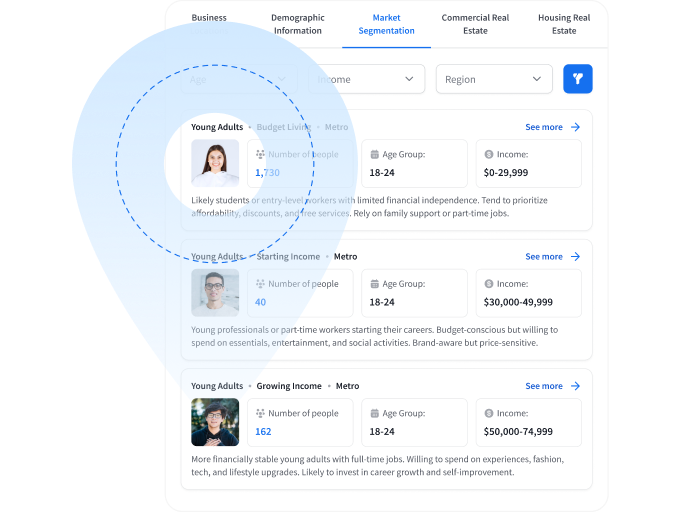
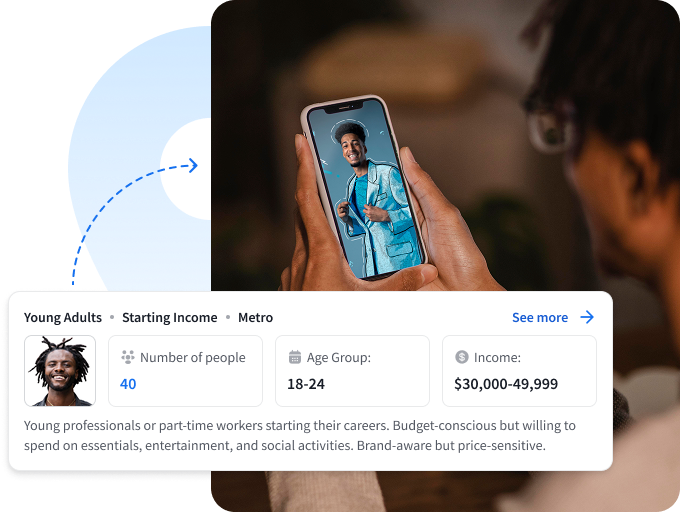
Mapchise also identifies the groups you should focus on, whether it’s families seeking budget-friendly meals, urban professionals grabbing fast-casual meals, or high-end spenders seeking fine-dining experiences. Not only does our platform tell you where your spenders are, it also links that spend back to your database, verifying which diners are most important to invest in and how you can attract more of them. This provides greater accuracy in restaurant marketing analysis.
Mapchise takes revenue attribution to the next level by attaching every menu item to its consumer. We connect loyalty systems and POS data to reveal not only what sells but also who buys it.
Menu-level demographics: understand what type of groups go for what items, whether it’s families with kid-friendly picks, young professionals selecting healthier bowls, or high-earning diners chasing premium options.
Targeted Promotions: Couple menu items with the right audience using campaigns informed by real behavior, not guessing.
Product Development: Identify gaps through detailed demand analysis across demographic and psychographic segments. Identify which dishes can attract new guests or increase repeat visits.
Restaurant groups and franchisors nationwide trust Mapchise to guide their growth strategy. We’re built for restaurants and only restaurants.
It’s a platform that aggregates customer information across many sources, like point-of-sale systems, online ordering, and loyalty programs, and then joins that data together into robust, unified customer profiles.
A CRM maintains static information about contacts, while a restaurant CDP analyzes deeper data and spending habits to support marketing analysis and automated guest engagement.
Yes, it is possible to do this with Mapchise – our service acts like a restaurant data analytics tool and effectively connects POS and rewards data.
It allows restaurant marketers to attribute revenue with precision, determining which marketing activity or channel is generating visits and revenue.
Yes. Our restaurant guest data platform is scalable and fully customizable to handle data complexities associated with multi-group/unit and franchisor businesses.

Despite increasing marketing budgets, 61% of marketers say measuring ROI remains their top challenge. Digital dashboards may show plenty of clicks and impressions, but these


Restaurant Data Analytics: How to turn daily numbers into smarter decisions Margins are thin, food costs go up, labor is a moving target, and the

Restaurant expansion rarely fails because of bad food. It fails because the location was wrong. Industry data shows that many restaurant closures occur within the

Select the cities, regions, or territories you want to evaluate
Mapchise scans competitors, products, pricing, and demographics to reveal opportunities and risks
Receive clear insights and data to better inform your decision-making process to maximize profitability
Discover how our platform can drive your growth and maximize profitability